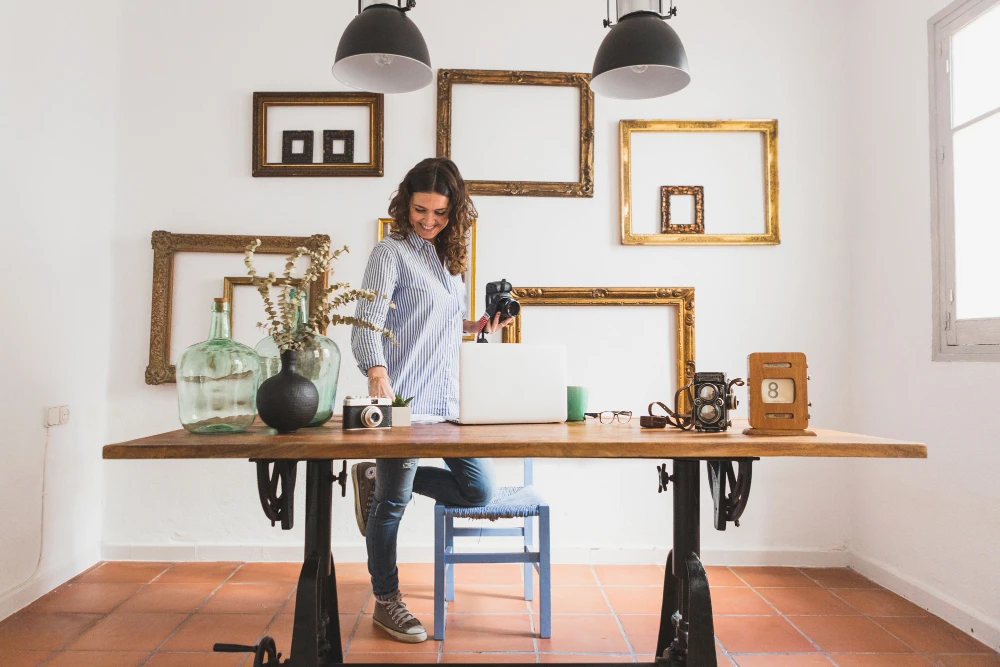
How to Design a Productive Home Office with Custom Furniture
A lot of people working from home are dealing with the same problem. They have squeezed a random desk into a bedroom corner, grabbed a chair from the dining table, and called it a workspace.
It works. But it does not work well.
If you find yourself distracted, uncomfortable, or just unable to focus, the space around you is probably part of the reason. Designing a productive home office with custom furniture changes that completely. You stop adapting to your space and start building a space that adapts to you.
This blog will guide you through the process, step by step.
Here is what we will walk through:
- How to assess what your home office actually needs
- Why custom furniture makes such a big difference in a home setting
- The key pieces you need to get right from the start
- How to make your space look and feel like a real, professional workspace
Step One: Understand How You Actually Work
Before you think about furniture, think about your workday.
Do you spend most of your time on video calls? Do you need space to spread out physical documents? Do you work alone all day or do others sometimes share the space?
The answers to these questions shape everything. A productive home office with custom furniture starts with this kind of honest assessment, not with browsing furniture catalogues.
Grab a notebook and jot down the following:
- How many hours a day do you sit at your desk?
- What equipment do you use regularly?
- Do you need storage for files, samples, or supplies?
- Do clients ever visit your home office?
Once you have those answers, you have a real brief to work with.
Step Two: Look at Your Space with Fresh Eyes
Now walk into the room you plan to use and look at it differently.
Do not see walls and corners. See possibilities.
That awkward alcove next to the window? That could become a built-in desk with shelving above it. The unused wall behind the door? That is prime storage space. The room that feels too small? The right furniture layout can open it up significantly.
Custom home office furniture is designed specifically for your room’s dimensions. This is one of the biggest advantages over off-the-shelf options. Ready-made desks come in standard sizes. Your room almost certainly is not standard.
Measure the room carefully. Note the location of windows, electrical outlets, and doors. These details guide every custom furniture decision that comes after.
Step Three: Start with the Desk, Always
The desk is the heart of your home office. Everything else should support it.
When you invest in a custom desk, you get to decide exactly how wide it is, how deep the surface is, how high it sits, and whether it wraps around a corner. You also decide where the cable management goes, whether it has built-in drawers, and what material it is finished in.
That level of control matters more than most people realize.
A desk that fits your body, your workflow, and your room makes you noticeably more comfortable and focused. A desk that is slightly too shallow or too high creates small but constant friction throughout your day.
If you do long working hours, consider a height-adjustable custom desk. Being able to switch between sitting and standing reduces fatigue and keeps your energy up through the afternoon.
Step Four: Get the Chair Right
No piece of furniture affects your health and productivity more directly than the chair you sit in all day.
This is not the place to cut corners.
A good home office chair supports your lower back, adjusts to your height, and keeps your posture in a natural position. You should be able to sit in it for several hours without your back tightening up or your legs going numb.
While chairs are less commonly fully customized compared to desks, many suppliers offer options to match your chair to the finish and tone of your custom furniture. This keeps the space feeling cohesive rather than pieced together.
Step Five: Plan Your Storage Before You Need It
One of the fastest ways a home office falls apart is clutter.
Papers pile up. Cables get tangled. Supplies end up on the desk because there is nowhere else for them to go. Before long, the workspace you worked hard to set up starts feeling chaotic.
Custom storage solves this at the design stage, not as an afterthought.
Think about what you need to store and where it makes sense to store it. Custom shelving above the desk keeps reference materials within reach without cluttering the surface. Built-in filing drawers keep documents organized and out of sight. A custom credenza behind your chair gives you storage that doubles as a background on video calls.
When storage is designed specifically for your room, every item has a home. That alone makes a huge difference in how productive and calm your workspace feels.
Step Six: Think About Light and Layout Together
Lighting is one of the most overlooked parts of designing a home office, and it matters more than most people expect.
Natural light is best. Position your desk so the light comes from the side rather than directly behind or in front of your screen. This reduces glare and eye strain throughout the day.
If natural light is limited in your room, plan for layered lighting: a main overhead source, a focused desk lamp, and softer ambient light to reduce the harshness of a single bright source.
When you are designing a home office with custom furniture, plan your layout around the light sources in the room. Your furniture supplier can help you think this through, especially when deciding where built-in units should sit.
Step Seven: Make It Feel Like a Workspace, Not a Room with a Desk
This step is about the finishing details that pull everything together.
A productive home office should feel distinct from the rest of your home. That does not mean it has to look corporate. It just needs to feel intentional.
Custom furniture helps here because every piece is designed to work together. The wood finish on your desk matches the shelving. The tones you chose carry through the whole room. Nothing looks like it was randomly collected from different stores over the years.
Add a few practical finishing touches: a pinboard or whiteboard, a plant or two for warmth, and a piece of art that you actually like looking at. These details make the space one you want to spend time in.
The team at Creative Furniture works closely with clients to design home office furniture that balances function and style. Whether you need a compact setup for a small room or a full custom workspace, they guide you through every decision so the result actually works for you.
The Bottom Line
A great home office does not happen by accident.
It comes from understanding how you work, measuring your space honestly, and making intentional choices about every piece of furniture in the room.
When you design a productive home office with custom furniture, you are not just decorating. You are building a tool that supports your best work every single day.
Start with one honest question: is your current workspace actually helping you perform at your best?
If the answer is no, you already know what to do.
Frequently Asked Questions
Q1: Can I design a proper home office in a very small room?
Yes, small rooms work well with the right custom furniture. Built-in desks, wall-mounted shelves, and compact storage units make even tight spaces feel organized and functional without feeling cramped.
Q2: How do I stop my home office from feeling like part of my living space?
Use a consistent furniture style, keep the color palette separate from the rest of your home, and add a rug or divider to create a visual boundary. Small cues like these shift your mindset when you enter the space.
Q3: Should my home office furniture match the rest of my home’s interior style?
It does not have to match exactly, but it should not clash either. Pick one or two common elements like a wood tone or color and carry them through. That creates a space that feels connected to your home but still distinct enough to feel like a proper workspace.
Related Blog